
How Direct Debit works: mandates, settlement, and the guarantee
Direct Debit is one of the most widely used payment methods in the UK, processing billions of transactions every year for utilities, insurance, subscriptions, and loan repayments. Yet despite its ubiquity, the mechanics behind it are frequently misunderstood: particularly the settlement cycle, what happens when a payment fails, and what the Direct Debit Guarantee actually protects.
This article explains how Direct Debit works from mandate to settlement, what the Guarantee covers, and what failure looks like structurally. It is part of the Modulr General Education series on UK payment infrastructure.
What is Direct Debit?
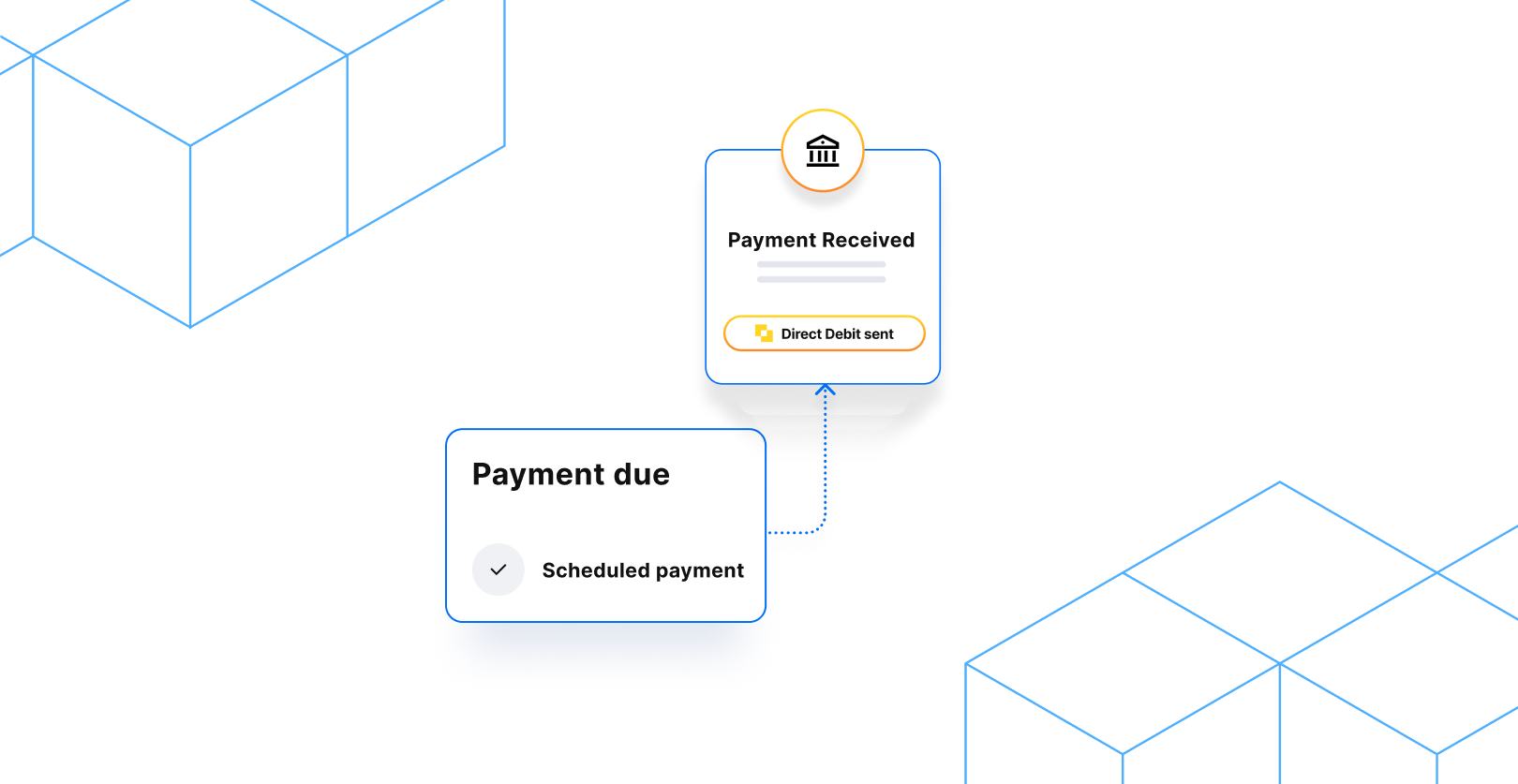
Direct Debit is a pull payment mechanism. A business collects money directly from a customer's bank account on an agreed schedule, with the customer's prior authorisation. The customer does not initiate each individual payment. Once the mandate is in place, the business submits a collection instruction and the funds are drawn automatically.
Direct Debit runs on the Bacs payment scheme, which is the same scheme that handles Direct Credit (payroll and supplier payments). It is worth being clear on the distinction: Direct Debit is a pull payment, meaning the business pulls money from the customer's account. Direct Credit is a push payment, meaning the payer pushes money out to a recipient. Both use Bacs, but they are different products that work in opposite directions.
For a full explanation of how the Bacs scheme operates, see What is Bacs?.
Common uses for Direct Debit include: utility bills, council tax, gym memberships, insurance premiums, mortgage repayments, and loan collections. The common thread is a recurring, predictable obligation where the business needs confidence the payment will arrive without the customer needing to act each time.
How does Direct Debit work?
The Direct Debit mandate
Before a business can collect a Direct Debit, the customer must authorise it. That authorisation takes the form of a Direct Debit Instruction (DDI): the formal mandate the customer gives to the business, confirming they consent to the collection of agreed amounts from their account.
Historically, DDIs were paper forms. Today, the standard route is AUDDIS: the Automated Direct Debit Instruction Service. AUDDIS allows businesses to submit mandates electronically to Bacs, where they are registered against the customer's account at their bank. The paper mandate still exists as a fallback, but AUDDIS is the default route for any business operating at scale.
Once a mandate is registered, the business has the right to collect payments in line with the terms the customer authorised. Any change to the collection amount or date requires advance notice to the customer. This is one of the three protections in the Direct Debit Guarantee, covered below.
The collection cycle
Direct Debit operates on a five-day cycle. Understanding each stage matters because the timing has direct implications for cash flow, reconciliation, and—critically—failure management.
- Day one: the business submits its collection file to Bacs. The cut-off time is typically 5pm. Files submitted after the cut-off are processed on the following day's schedule, adding a full day to the cycle.
- Day two: banks process the file and debit the customer accounts included in the submission.
- Day three: scheme settlement occurs and collections are transferred in bulk to the business.
- Day four: ARUDD (Automated Return of Unpaid Direct Debits) reporting becomes available. This is the first point at which failure data is visible and actionable. Day four, not Day three, is when a business learns which collections did not clear and why.
- Day five: the full cycle is complete. All outcomes are confirmed, reason codes are available, and follow-up actions can be taken with full information.
A common misunderstanding is that Day three settlement tells you everything you need to know. It does not. Settlement on Day three reflects cleared items only. The full picture (including which payments failed and the reason for each failure) is only available from Day four onwards. Planning around Day four without accounting for the ARUDD window means acting on incomplete data.
What is the Direct Debit Guarantee?
The Direct Debit Guarantee is the consumer protection framework built into the scheme. It has three elements.
First, advance notice: if the amount or date of a collection changes, the collecting business must give the customer advance written notice. The standard notice period is 10 working days, though businesses can agree a shorter period with their customer if both parties consent.
Second, the right to a refund: if a payment is collected in error: for the wrong amount, on the wrong date, or without proper authorisation, the customer is entitled to an immediate full refund from their bank, no questions asked.
Third, the right to cancel: a customer can cancel a Direct Debit at any time by contacting their bank. Cancellation removes the mandate and prevents future collections.
What the Guarantee does not cover is commercial disputes between the collecting business and the customer. If a customer cancels a Direct Debit because they dispute an invoice, the Guarantee gives them the right to stop future payments and reclaim any incorrect ones. It does not adjudicate the underlying commercial relationship. That is a separate contractual matter between the business and the customer.
What happens when a Direct Debit fails?
When a collection attempt does not clear, Bacs returns an ARUDD notification, which is the Automated Return of Unpaid Direct Debits. This arrives on Day four and tells the collecting business which payments failed and why.
ARUDD reason codes determine the appropriate recovery action. They are not interchangeable:
- Insufficient funds: the customer's account did not have enough money at the time of collection. This failure type is potentially recoverable through re-presentation, attempting the collection again.
- Account closed: the account the mandate was drawn on no longer exists. Re-presentation will fail. A new mandate is required.
- Instruction cancelled: the customer has cancelled their Direct Debit mandate. The collection cannot be retried. A new mandate is required if the relationship is to continue.
- Other codes: each has its own implication for what action is appropriate.
The reason code matters because applying the wrong recovery action wastes time and can damage the customer relationship. Re-presenting a collection against a closed account does not collect the money. Requesting a new mandate from a customer who simply had a temporary shortfall may be unnecessary and intrusive.
For businesses collecting at volume, the operational complexity of categorising, triaging, and acting on ARUDD data, across potentially hundreds or thousands of failures per cycle, is one of the structural constraints of the batch model.
Direct Debit vs other payment methods
Understanding Direct Debit is easier when it is placed alongside the alternatives.
Direct Debit vs standing orders
A standing order is a push payment. The customer instructs their bank to send a fixed amount on a recurring schedule. The business receives what the customer sends and cannot vary the amount. Direct Debit is a pull payment; the business controls the collection.
Direct Debit vs Faster Payments
Faster Payments is a near-instant, one-off transfer. Direct Debit is a batch-based, three-day recurring collection. They serve different purposes and have different settlement profiles.
Direct Debit vs Variable Recurring Payments (VRP)
VRP is an Open Banking-based recurring payment mechanism that uses Faster Payments as its underlying rail. It operates on a consent model governed by Open Banking rather than a Bacs mandate. Settlement is near-instant rather than three days. For a comparison of Direct Debit and VRP, see our article on Direct Debit vs Variable Recurring Payments.For a full explanation of Open Banking and how it underpins VRP, see What is Open Banking?
Direct Debit remains one of the most reliable ways for businesses to collect recurring payments at scale, but understanding its mechanics, from mandate to settlement to failure, is what separates smooth operations from avoidable problems. For businesses looking to build efficient, automated collection and disbursement workflows, Modulr's Pay-ins and Pay-outs solutions are designed to do exactly that.
This article is for informational purposes only and should not be construed as financial, legal, or regulatory advice.
TL;DR
Direct Debit is a pull payment mechanism running on the Bacs scheme. It operates on a five-day cycle, with settlement on Day three and failure data (ARUDD) available from Day four. The Direct Debit Guarantee protects consumers, not collecting businesses. At collection volume, the batch model and failure triage create operational complexity that grows with the size of the portfolio.
FAQs
What is the difference between a Direct Debit and a standing order?
A Direct Debit is a pull payment: the business requests the funds from the customer's account with prior authorisation. A standing order is a push payment: the customer instructs their bank to send a fixed amount on a set schedule. With Direct Debit, the collecting business controls the amount and date within the terms the customer agreed. With a standing order, the customer controls both.
How long does a Direct Debit take to clear?
Direct Debit runs on a five-day cycle. A collection file submitted on Day one settles on Day three. However, the full picture is not available until Day four, when ARUDD failure data becomes visible. Day five closes the cycle with all outcomes confirmed. Treating Day three settlement as the endpoint means acting without the failure data that arrives on Day four.
What does the Direct Debit Guarantee cover?
The Direct Debit Guarantee gives consumers three protections: advance notice of any change in amount or collection date, the right to an immediate full refund from their bank for any incorrect collection, and the right to cancel at any time. It protects consumers paying by Direct Debit. It does not cover commercial disputes between the collecting business and its customers.
What happens if a Direct Debit payment fails?
When a Direct Debit fails, Bacs returns an ARUDD notification on Day four with a reason code explaining why. Insufficient funds may be recoverable by re-presentation. Account closed or instruction cancelled requires a new mandate. The reason code determines the appropriate recovery action. Applying the wrong action, such as re-presenting against a closed account, will not recover the payment.
What is AUDDIS?
AUDDIS stands for Automated Direct Debit Instruction Service. It is the electronic system through which businesses submit new Direct Debit mandates to Bacs for registration against customer bank accounts. AUDDIS replaced the paper mandate process for most businesses operating at scale and is the standard route for mandate registration today. The paper mandate still exists as a fallback option.
